

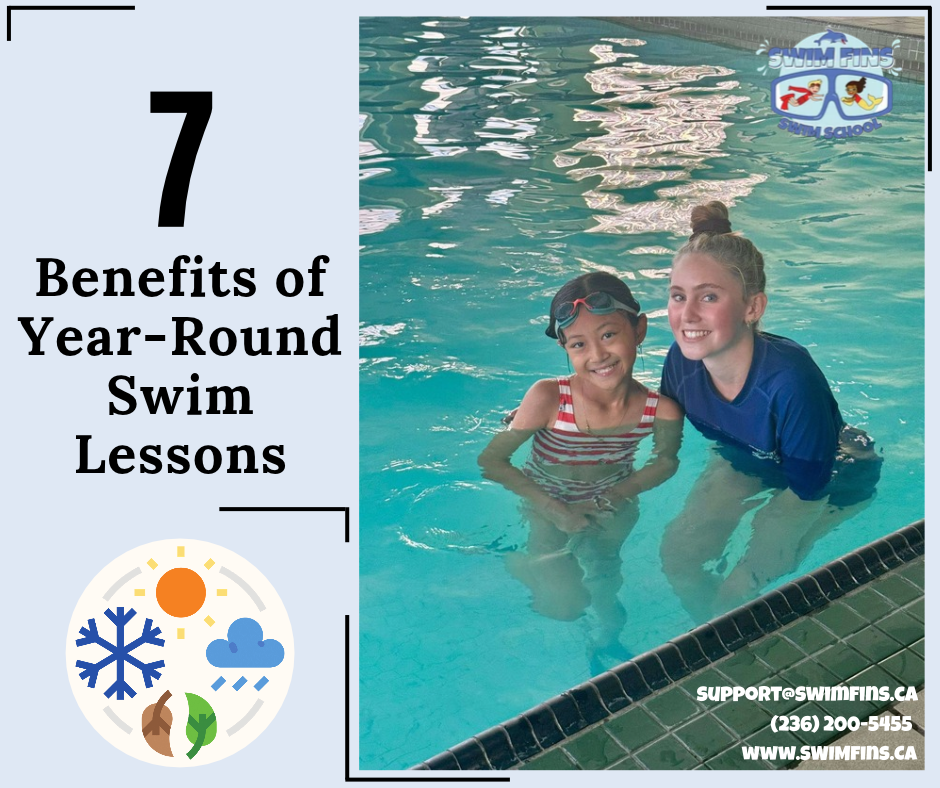
Swimming is often thought of as a summer activity. But for children, swimming is much more than something to do when the weather is warm. It’s a life skill that develops through practice, repetition and consistency.
At Swim Fins, we believe children make the strongest progress when swimming is part of their routine throughout the year, not something they start and stop with the seasons.
Here are seven reasons why.
1. Swimming Skills Need Practice — Not Long Breaks
Swimming is a physical skill. Children need regular opportunities to practise things like breathing, floating, body position, kicking and strokes.
A long break can mean that a child comes back to the pool feeling less confident or needing time to get comfortable again.
Year-round lessons help children build on what they already know instead of continually starting over.
2. Progress Happens Faster With Consistency
One of the biggest advantages of swimming throughout the year is continuous progress.
Rather than spending the first few weeks of every new session remembering skills from the previous season, children can keep developing:
stronger strokes
better breathing
improved endurance
greater coordination
stronger water confidence
more advanced swimming skills
At Swim Fins, our goal isn't simply to get children through a lesson. It's to help them get better every time they get in the water.
3. Water Safety Skills Stay Fresh
Water safety isn't a skill children should only think about in June.
Floating, breath control, swimming to safety, treading water and responding calmly in the water all become more familiar with regular practice.
Of course, swimming lessons are only one part of water safety. Active supervision, appropriate lifejackets and other layers of protection remain essential around water.
But regular swimming gives children the opportunity to continually practise the skills that can help them feel more capable and prepared in the water.
4. Confidence Grows With Every Lesson
There's something powerful about watching a child master a skill they couldn't do a few months earlier.
Maybe they finally swim across the pool independently. Maybe they put their face underwater without hesitation. Maybe they learn a new stroke or rescue skill.
Those small victories add up.
Regular swimming gives children repeated opportunities to try, practise, make mistakes and try again building confidence both in and out of the pool.
5. Swimming Keeps Kids Active During the Colder Months
When the weather gets colder, it's easy for children's activity levels to change.
Swimming provides a fun way to keep moving throughout fall and winter while developing strength, endurance, coordination and overall fitness.
And because swimming is a low-impact activity, it's an excellent way for children to stay active without putting the same stresses on their joints as some higher-impact sports.
6. Swimming Becomes Part of Their Routine
Children thrive on routine.
When swimming lessons are a regular part of their schedule, they become something familiar rather than something they have to “get back into” every spring or summer.
That consistency can also make lessons easier for parents instead of asking “When should we start swimming again?”, swimming simply stays part of the family's routine.
7. Being Comfortable in the Water Opens Up More Opportunities
A child who is comfortable and confident in the water can enjoy more water-based activities as they grow.
Pool parties. Family vacations. Camps. Beaches. Boating. Water parks.
The goal isn't necessarily to create a competitive swimmer.
It's to help children become capable, confident and safe around water.
Swimming Isn't Just a Summer Activity
There will always be something special about swimming in the summer. But children's swimming skills don't need to take a summer vacation. The more consistently children practise, the more opportunities they have to develop their skills, build confidence and become comfortable in the water.
At Swim Fins Swim School, our unique Learn-to-Swim Program is designed around progression, maximum participation and helping children develop their swimming skills efficiently. With small classes, warm pools and professional coaches, we help children keep moving forward from one session to the next.
Don't start from scratch every summer. Keep swimming all year and keep the progress going. 💙
